Retail Innovation
The Rise of Phygital: Bridging Stores & Screens
Phygital is no longer a trend — it's the operating reality of retail in 2026. The data, the playbooks, and what it takes to build truly connected commerce.

Zenul Jinwala
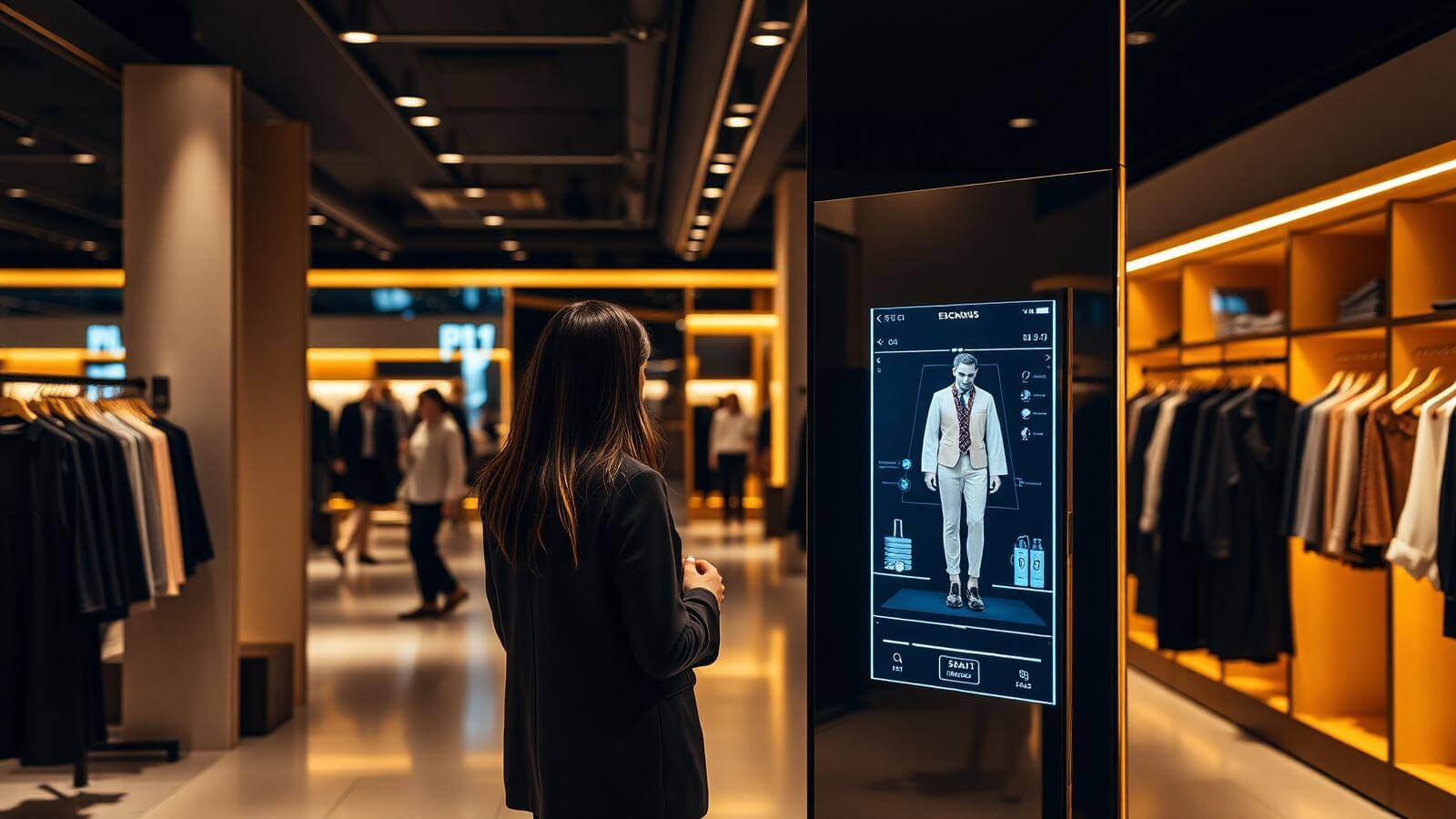
A quiet revolution on the shop floor
There’s a quiet revolution happening on the shop floor — and it doesn’t look like a store anymore.
Walk into a forward-thinking retail space today and you’ll find smart mirrors that style you before you try anything on, QR codes that unlock product stories, and associates armed with tablets that know your purchase history before you say a word. Step outside, and the experience follows you — on your phone, in your inbox, across your social feed.
This is phygital. Not a buzzword. Not a pilot project. A fundamental restructuring of how commerce works.
What “phygital” actually means (beyond the hype)
Phygital is the deliberate integration of physical and digital experiences into a single, seamless customer journey. It’s not about adding screens to a store. It’s about removing the friction between where a customer browses and where they buy — and making both feel like the same place.
“In 2026, omnichannel and phygital models are not just a strategy — they are an operational necessity.“
Shoppers today expect digital and in-store experiences to blend seamlessly — phygital is no longer just a buzzword but a baseline expectation. Leading retailers are heavily invested in seamless journey orchestration, integrating mobile, AR/VR, in-store smart kiosks, and adaptive physical formats to deliver highly personalised experiences.
The numbers that make the case
The data across Retail A:Rise’s core markets tells the same story from different angles.
India: the world’s largest phygital laboratory
The Indian retail market reached USD 1,060 billion in 2025 and is projected to grow at a CAGR of 11.40% to reach USD 3,121 billion by 2035, driven largely by the rising dominance of phygital commerce.
By the numbers
USD 3.12 trillion
Projected size of India’s retail market by 2035 — with phygital commerce as the primary growth engine. Smartphone penetration has crossed 880M and India is on track for 350M 5G subscriptions by 2026.
The Middle East: building phygital natively
The Middle East retail market — valued at USD 809 billion in 2024 — is projected to reach USD 1,532 billion by 2033, with the e-commerce segment expected to grow at a CAGR of 16.8%. The region isn’t just adopting phygital — it’s building it natively into new retail formats, from luxury mall experiences in the GCC to digital-first grocery models in the UAE and KSA.
Globally: convergence, not competition
According to a January 2026 Forrester report, US e-commerce sales will reach $1.8 trillion by 2030, accounting for 29% of total retail sales — yet 71% of consumers still shop in-person as often or more than before the pandemic. Physical and digital aren’t competing. They’re converging.
Where it’s actually happening

India’s homegrown phygital champions
Reliance Industries has pioneered a phygital retail model through JioMart and AJIO, combining its massive offline retail network with digital commerce. Tata Neu connects cross-brand loyalty into a single ecosystem — from BigBasket to 1mg — embedding AI into POS, inventory and loyalty to personalise customer journeys at scale.
Myntra Studio offers influencer-led shoppable videos, Tata Cliq Palette is investing in curated livestream formats, and Tanishq has built a virtual showroom that replicates its in-store ambience digitally. India’s D2C brands aren’t just going phygital — they’re reinventing what phygital looks like.
The AI-powered store associate
Verizon’s Global Head of Retail describes the phygital brand ambassador as a new class of retail engagement — a knowledgeable, AI-powered environment that adapts to individual customer preferences in real time. In practice: associates who walk up to you already knowing what you browsed last night, your typical size, and what’s in stock in your preferred colour.
Key insight
Agentic AI now powers ~40% of retail operations
Capable of autonomously executing multi-step actions like inventory redistribution or real-time targeted marketing. The store associate isn’t being replaced — they’re being supercharged.
Gen Z is rewriting the rules
Over two-thirds (69%) of Gen Z consumers shop in-store at least weekly in 2026 — yet roughly 1 in 3 now prefer using GenAI tools like ChatGPT to research products before purchase. They move between TikTok, a physical store and a checkout app without noticing the seam — because to them, there is no seam.
“Discovery is happening on feeds. Validation is happening in stores. Conversion is happening everywhere in between.“
The three pillars of a phygital strategy
1. Unified data
Phygital only works when your in-store and digital data talk to each other. Customer purchase history, browsing behaviour, loyalty points, and returns — all of it needs to be visible in one place, accessible to associates on the floor and algorithms in the cloud simultaneously. 30–45% of US consumers now use AI for product research and comparison — which means the data trail starts long before a customer walks through your door.
2. Experience-led physical spaces
IKEA, Dollar General and Family Dollar have pioneered small-format, urban-centric stores using AR and community-based pop-ups to maximise reach without substantial physical investment. The store’s job is no longer just to sell. It’s to create the kind of moment no algorithm can replicate — and let the digital layer handle the conversion.
3. Frictionless fulfillment
BOPIS and BORIS (Buy Online, Pick up / Return In-Store) aren’t just convenient — they’re the structural glue between channels. Retailers must have real-time visibility into supply across all channels to facilitate these services. The technology is the last 20%. The operational transformation is the first 80%.
What leaders get wrong
Most brands approach phygital as a technology project. They install a smart screen. They launch an app. They add a QR code to the shelf. Then they wonder why nothing changed.
The mistake is leading with tools instead of journeys. Phygital is not about what you install. It’s about how a customer feels as they move from awareness to purchase to loyalty — across every surface, without ever noticing a gap.
By the numbers
Only 12% of Indian retailers
have integrated any form of immersive tech into their digital presence — with most SMEs citing cost, lack of internal tech talent and ROI concerns. The brands waiting for perfect conditions are already falling behind those experimenting imperfectly.
The road ahead
By 2026, the phygital brand ambassador — a fusion of AI, adaptive intelligence and real-time connectivity — is becoming a defining competitive advantage. Retailers who embrace this will transform stores into data-rich, personalised, experience-led environments where the future of retail isn’t just transactional — it’s unforgettable.
“The retailers who will win the next decade are not those who build the best website or the most beautiful store. They are the ones who make both feel like one.“
The Retail A:Rise perspective
At Retail A:Rise, we see this play out in every conversation among our community — from leaders in Mumbai and Bengaluru to Singapore, Dubai and New York. The phygital shift isn’t theoretical. It’s the lived reality of every brand in our network navigating this transformation right now.
The question is no longer whether to go phygital. It’s how fast — and how well.
Join the Tribe
Want to explore what this looks like for your brand?
Connect with the leaders building it right now — at our next roundtable in your region.
Stay in the loop
Get the next dispatch in your inbox.
Curated takes on retail innovation across India, MENA and SEA — every two weeks. No noise.